Contributed by Denise Angela Ofilada, Journalism student, PUP College of Communication
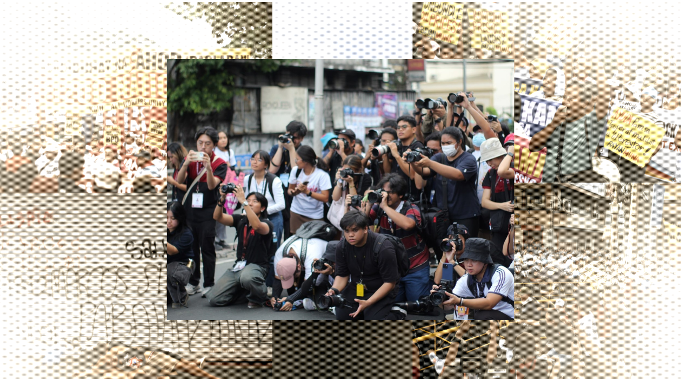
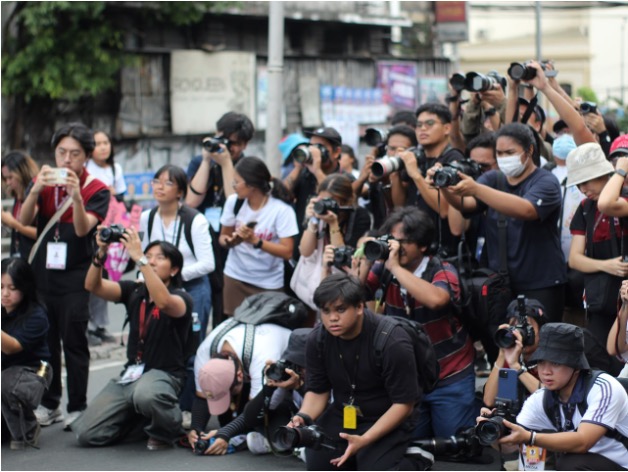
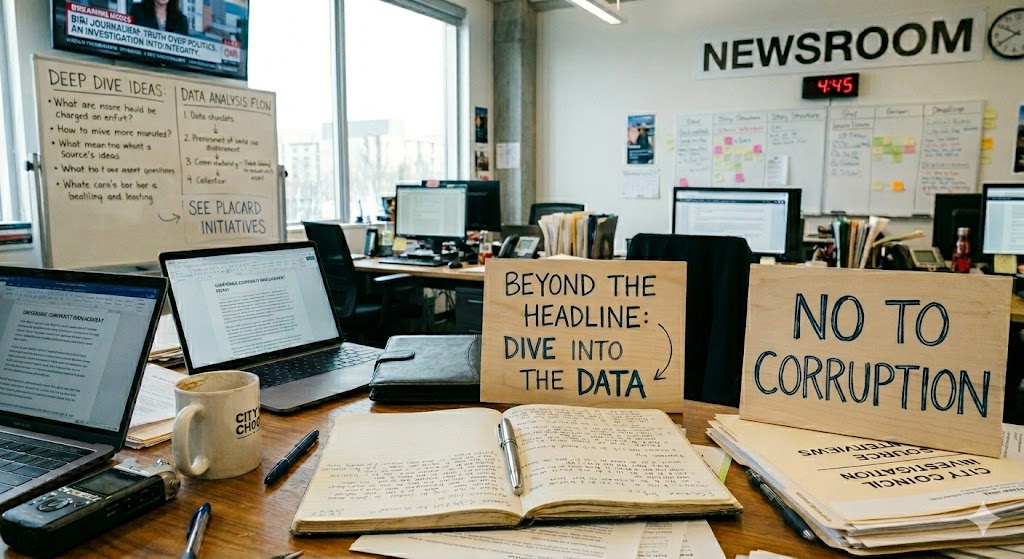
Beyond a career, journalism is a commitment to the truth. Awareness is vital, as journalists serve as the primary educators of the public.
We grow up believing the government exists to protect us, but growing up also means growing wiser. As inflation rises and hunger spreads, we realize our suffering isn’t born from a lack of effort—it is the result of a system that is actively pulling us down.
When we finally recognize that we are being taken advantage of, we face a choice: some choose to swallow the pain and turn a blind eye, while others gather the courage to speak for those who cannot.
This courage often manifests in the work of activists and journalists, who—against all odds—strive to shed light on systemic anomalies and continue to fight for what every Filipino deserves.
It makes you wonder: what was the turning point that led them to trade their silence for a megaphone or a pen? What do they truly think about a government they must constantly hold to account?
The Journalist as a Beacon of Truth
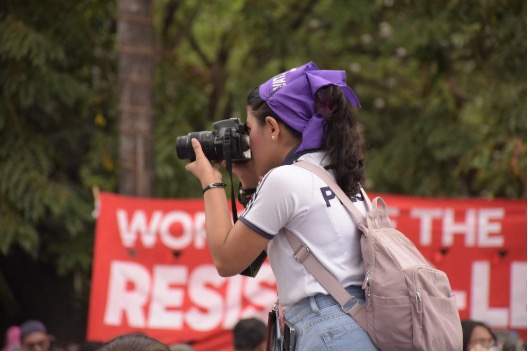
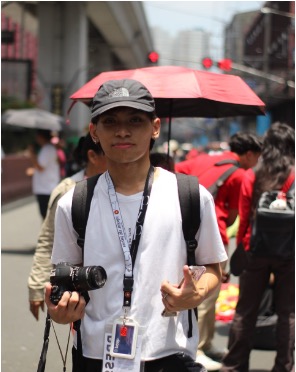
Tracy Althea Ramos lives between the realities of two sides. She’s a journalism student from the Polytechnic University of the Philippines (PUP) and an activist. Ethically, journalists are taught to stay neutral and unbiased, but that theory contradicts the practice of activism, which demands taking a definitive stand.
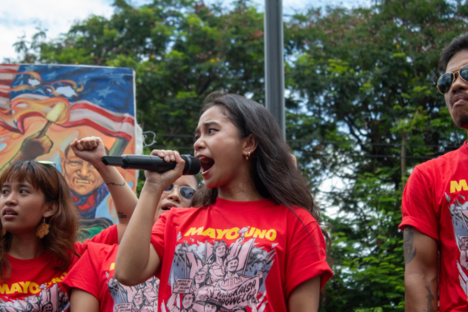
Witnessing a systemic rot—exemplified by the 2022 election where underqualified candidates triumphed—compelled her toward journalism and activism. She realized that “wrong” electoral choices aren’t merely the fault of citizens, but the result of the ruling class’s information manipulation. By exploiting the marginalized’s lack of access to truth, these elites ensure that the most vulnerable continue to make uninformed political decisions.
Tracy is deeply committed to laborers’ rights. Growing up with laborer parents, she has firsthand knowledge of the government’s neglect of the working class. She argues that despite rising living costs, wages remain unlivable, forcing households to stretch limited incomes while basic necessities like oil and rice become unaffordable. According to Tracy, this exploitation is not a simple economic issue but stems from the greed of those in power, who deliberately keep workers in poverty to serve their interests.
As a journalism student, it is in Tracy’s heart to inform people of what is happening to our society. “Importante talaga na magkaroon ng marami pang mga bagong mamamahayag na gagampanan yung responsibilidad ng paglalaan ng oras, ng pagod, ng dugo’t pawis at ng panahon na ipahayag kung ano yung tunay na nangyayari sa lipunan,” she stated.
Beyond a career, journalism is a commitment to the truth. Awareness is vital, as journalists serve as the primary educators of the public.
Based on her observations, some student journalists are not politically aware enough, which makes her quite disappointed. She believes that as a journalist, you should care enough to indulge yourself in discourses, “Anong ibabalita mo sa mga tao if in the first place hindi mo alam yung nangyayari sa lipunan?” she remarked.
Although journalists are expected to maintain impartiality, truth itself is not inherently neutral. For this journalist, active participation in political discussions is essential, as remaining silent or claiming neutrality in the presence of systemic injustice constitutes a neglect of journalistic responsibility.
Embodying the Role of an Activist-Journalist
She recalled that when she stepped into college and became an activist, she realized that we cannot fully rely on the government for social change, because the government is corrupt and feeds on people’s adversity. Tracy believes that even though electing the right people to lead is crucial for good governance, the fight should not stop there.
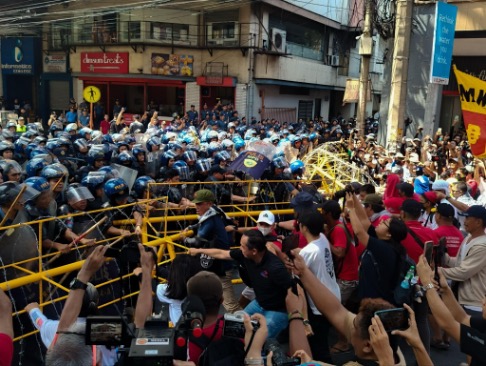
Emotions drive Tracy’s resistance to oppression. She channels anger, disappointment, and betrayal into a protest against injustice. Tracy recognizes the fear involved in public demonstrations, but her experience as a journalist and activist has made her accustomed to being a “target” of state forces. She observes that armed forces are consistently present at rallies, including those held in front of the university.
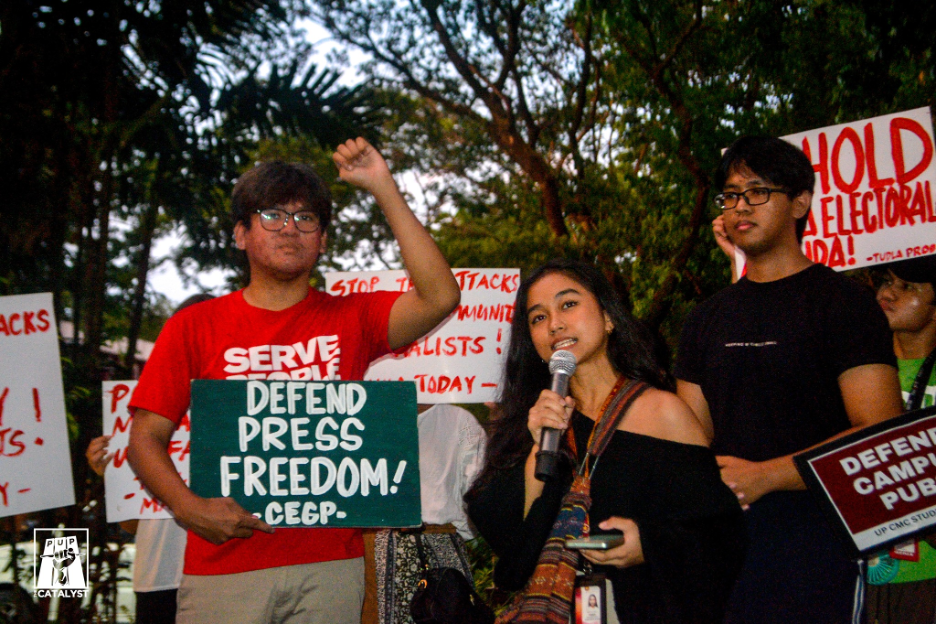
What fight do activists and protesters that are armed with nothing but placards, megaphones and flags have against these deployed police that are armed with weapons and barrels? People have rights to complain, to organize mobilizations and head to the streets–rallies to not pose threats to society.
It might seem scary, but letting our voices be heard is one crucial way to achieve change, and for Tracy, to live in a world where the government continues to abuse its people is scarier. She hopes for everyone to participate in movements, not just to protest–but to learn and to empathize with people who are marginalized.
Tracy cannot be simply boxed into one word. Embodying both roles as an activist and a journalist, she shows that the truth should never be quiet and struggles should be broadcast. From the bold letters on placards to the words woven into articles, the Filipino people’s fight must shine on.
#journalism #politics #studentpointofview #truth #rubyspreciousmoments