


The bakery stands as a proof that some traditions are too deeply woven into a community to disappear. Fires may destroy walls and roofs, but the taste people grow up with—and the memories baked into it—will always find their way back home. A story of resilience and rebuilding.
After decades of serving freshly baked bread to the community of Sta. Mesa, Bakery sa Pureza, formerly known as The Old Pureza Bakery, has reopened its doors at 350 Pureza St. corner Araullo St., Barangay 626, Manila—bringing back the familiar aromas and flavors that generations of residents have grown up with.
More than just a neighborhood bakery, the shop has long been a quiet meeting place for the community. Students on their way to class, workers heading to early shifts, and longtime residents starting their mornings have all passed through its doors for warm pandesal, Spanish bread, and other classic Filipino pastries. For over three decades, the family-run bakery built a reputation not only for affordable bread but also for consistency—customers knew exactly what taste to expect every time they walked in.
However, that daily ritual was suddenly interrupted when a devastating fire forced the bakery to shut down temporarily. For many residents in Pureza, the closure felt like losing a small but meaningful part of the neighborhood. Loyal customers wondered if they would ever taste their favorite breads again.
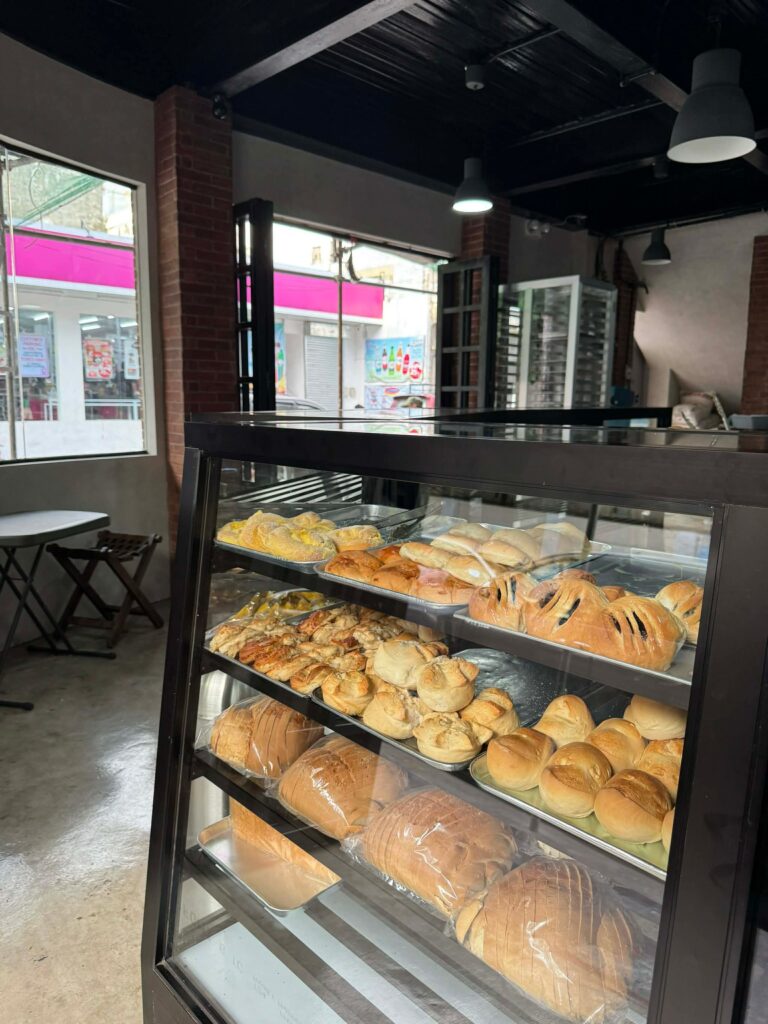

For the family behind the bakery, rebuilding the shop meant more than restoring a business. It meant protecting a tradition. According to Tara Nicole Bucao, one of the second generation owners, the secret to the bakery’s longevity was never just its location or its physical structure.
“It was definitely the making of our breads,” Bucao said. “Set aside the location and structure of the bakery itself, what kept us going for more than 30 years was how the taste of our bread stayed the same and how it connected to the people of Pureza.”
While the building had to be reconstructed, the recipes remained untouched. The family made it a priority to preserve the same flavors customers had loved for decades, believing that the familiar taste would reassure people that the bakery they grew up with was still there.
Encouragement from the community also played a crucial role in the decision to reopen. Even during the months when the shop was closed, residents would stop by or send messages asking when the bakery would return.
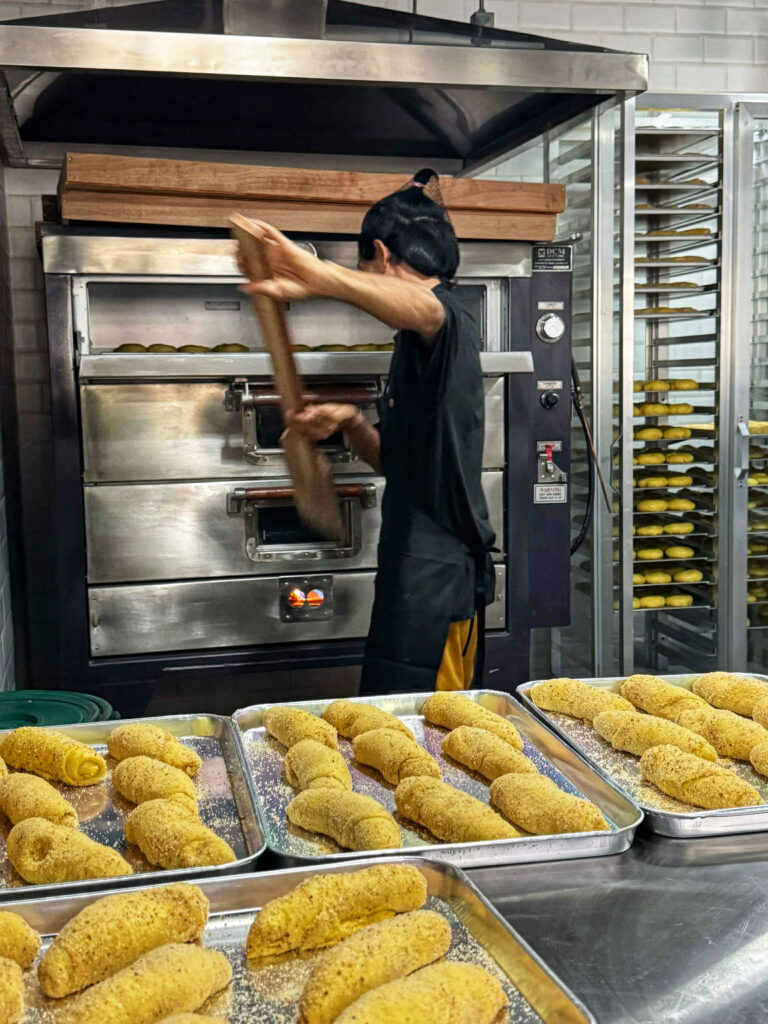
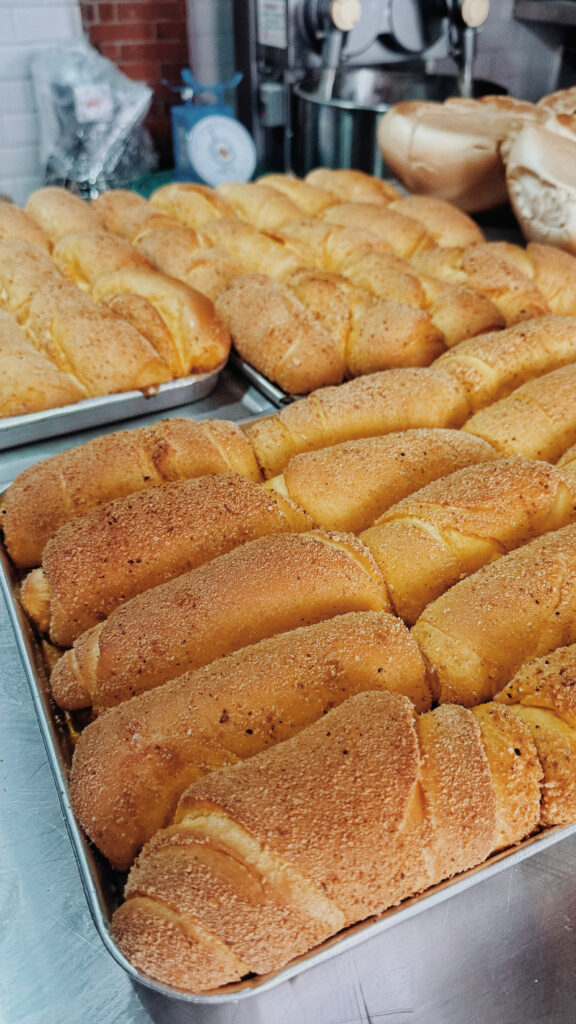

“People would say, ‘Namimiss ko na Spanish bread niyo’ or ‘Wala na kami mabilhan na masarap na pandesal.’ Those comments were enough to let us know we made the right decision in coming back,” Bucao shared.
Today, the bakery once again draws customers from all walks of life. Students from the nearby Polytechnic University of the Philippines (PUP) regularly drop by for pan de coco and ensaymada between classes, while longtime residents line up as early as 5: 00 a.m. for freshly baked pandesal. Yet among all its offerings, the bakery’s Spanish bread remains the crowd favorite, often selling out before the day ends.
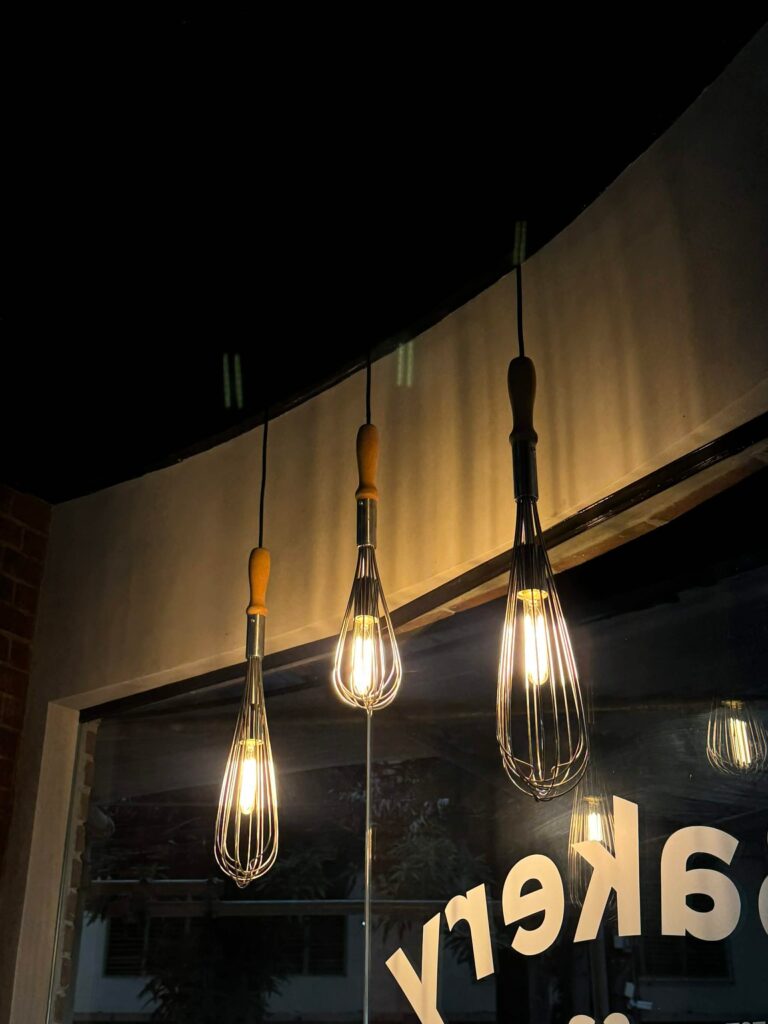
Although the bakery retained its traditional menu, the shop itself now features a refreshed industrial-style interior. Customers initially mistake the store for an upscale café, only to be pleasantly surprised that the bread remains affordable.
As the ovens glow once again and the scent of freshly baked pandesal drifts through Pureza Street each morning, the bakery stands as a proof that some traditions are too deeply woven into a community to disappear. Fires may destroy walls and roofs, but the taste people grow up with—and the memories baked into it—will always find their way back home.
#BakerysaPureza #rubyspreciousmoments #rubyasoyph


